Albanian Street Food: A Guide to the Best Cheap Eats
Albanian street food is one of the great bargain food experiences in Europe. In a country where a full sit-down restaurant meal already represents extraordinary value by Western standards, the street layer goes further still — some of the best eating in Albania happens at pavement grills, bakery windows and market stalls for €1–3 a portion. Better still, it’s not a tourist industry: this is how Albanians have always eaten when they’re in a hurry, away from home, or simply in the mood for something quick and satisfying. Here’s what to look for and where.
The short version – What to try: sufllaqe, qofte off the grill, fresh byrek, petulla, simit – Cost: €1–3 per portion — sometimes less – Best hubs: Pazari i Ri (Tirana), city markets, late-night sufllaqe stands – When to go: byrek in the morning, qofte from midday, sufllaqe late – Tip: the smell of charcoal grilling is your best guide
Sufllaqe — the Albanian doner
Pronounced soof-LAH-cheh, sufllaqe is the Albanian version of the doner kebab — and the universal late-night food. Meat (usually chicken, beef or a mix) is cooked on a vertical rotating spit, sliced thin, and packed into a thin Albanian-style flatbread with yoghurt sauce (salcë kosi), tomatoes, cucumber and — crucially — chips inside the wrap. The chips are not optional. They’re the structural feature that distinguishes Albanian sufllaqe from its Turkish or Greek cousins.
Two more honest notes: – The Albanian flatbread is thinner and more crepe-like than Turkish bread. – The meat is more generously seasoned with paprika and dried herbs than the equivalents in neighbouring countries.
Cost: €2–3 for a full wrap that’s a complete meal. Sufllaqe stands are everywhere; Street Food 12 — Nesh behind Skanderbeg Square in Tirana is a popular, reliable example. In any town, look for queues; busy stand = fresh meat.
Qofte — grilled meatballs off the street grill
The smell of charcoal and grilling meat is one of the defining sensory experiences of walking through Albanian streets in the afternoon. Qofte are hand-shaped grilled meatballs (beef-lamb mix), seasoned with cumin, mint, onion and paprika. At restaurants they come on a plate; at street level you usually get them in three forms:
- Panini me qofte — qofte in a fresh bread roll with onion, sauce and sometimes salad. The classic working-lunch sandwich.
- Qofte në pjatë — on a paper plate with bread and salad, eaten at a counter.
- Kremviçe — patty-style grilled meat (a beef-lamb mix), served in pita or flatbread.
Qofte grills are active from midday through the evening. Family-run grill houses in any Albanian town do this brilliantly, and at €1–3 a portion you can graze your way around a city for the price of a Western coffee.
Byrek — Albania’s everyday street food
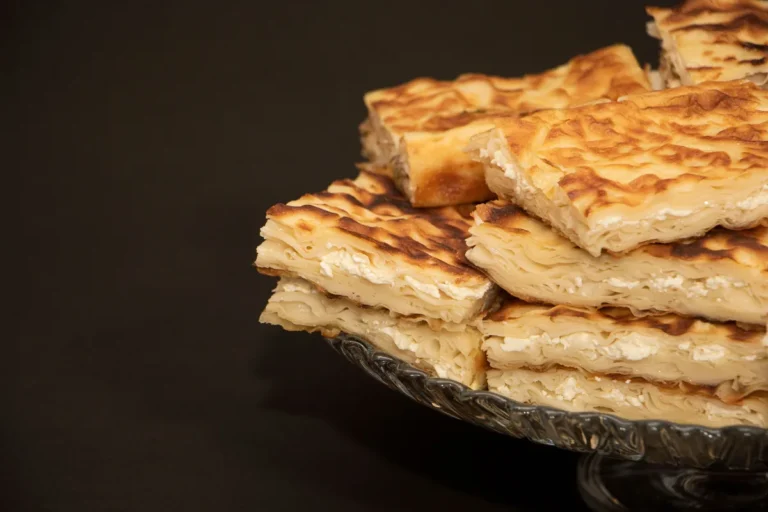
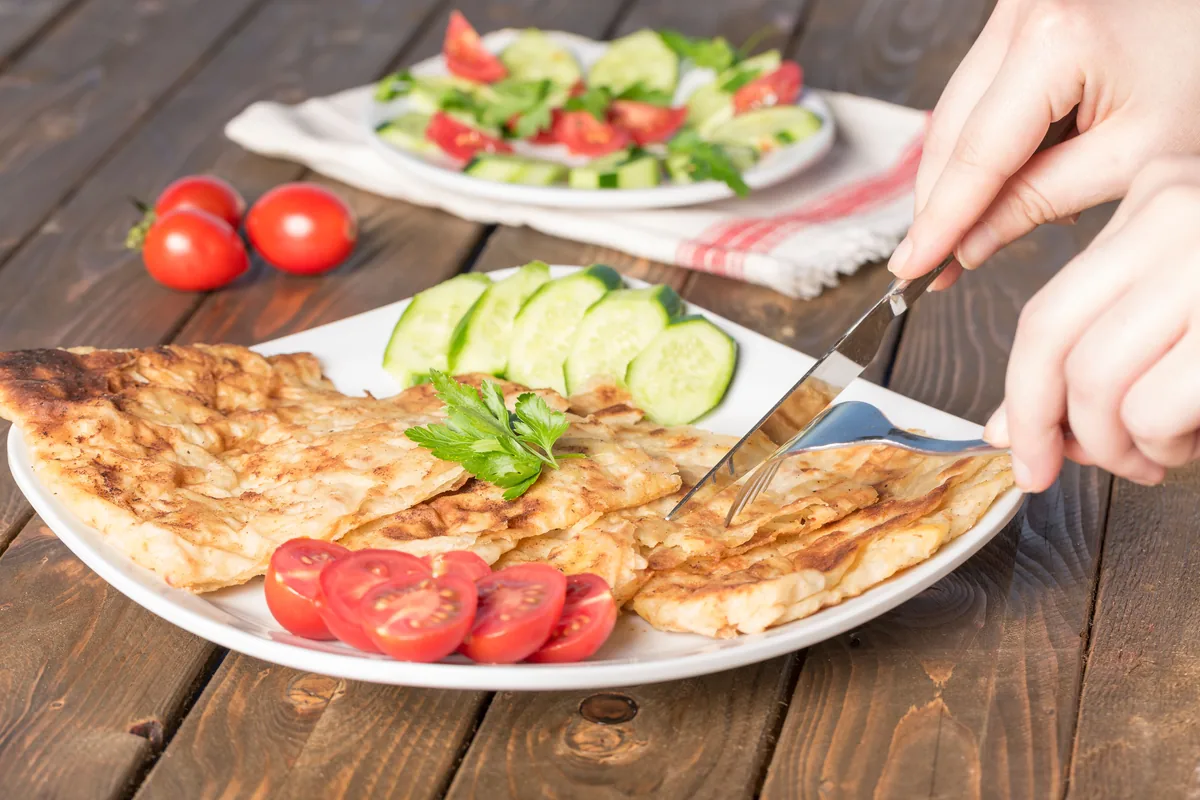
If you can only eat one Albanian street food, eat byrek. Layered filo pastry filled with cheese, spinach, meat or pumpkin, sold for €1–2 at every byrektore (byrek shop) in the country. The full story — types, regions, how to spot the good stuff — is in our byrek guide, but the short version: head for a place that makes nothing but byrek, look for high turnover, eat it warm with a glass of dhallë (buttermilk).
Byrek is the breakfast/morning default; by 4 pm, the best stuff is usually gone.
Petulla — fried dough
A small, simple pleasure: petulla is deep-fried dough rounds — crispy outside, fluffy inside — served sweet (with honey, jam or sugar) or savoury (with feta or yoghurt). Found at bakeries, market stalls and small cafés, especially in the afternoon and at fairs. A petulla me mjaltë (with honey) is one of the country’s everyday cheap pleasures.
There’s also kulaçka me kos — fried dough stuffed with cheese, spinach and yoghurt — a more substantial street snack.
Simit — sesame bread rings
Simit is the circular, sesame-encrusted bread ring you’ll see at every street bakery, especially in the morning. Originally Ottoman, now beloved across the Balkans, it’s the cheapest filling thing on offer — usually around €0.30–0.50. Eaten with cheese, olives or just on its own with a strong coffee.
Roasted chestnuts (autumn/winter)
When the weather turns cool, roasted chestnut carts appear on the streets of Tirana, Shkodër and other cities. The smoky smell of charcoal-roasted kështenja is autumn in urban Albania. A small paper cone is €1–2 and the perfect thing for a chilly evening walk along the xhiro (see our coffee culture guide).
Flija (in the north) — slow-cooked, on the street at festivals
A specialty more than a daily street food, but worth knowing: flija is a slow-baked, multi-layered pancake-style dish from the northern highlands. At mountain festivals and roadside stalls in Tropoja, Valbona and the Alpine villages, you’ll see it cooked outdoors on a saç (a domed lid covered with hot coals) and sold in slices. If you’re hiking the Valbona–Theth route, keep an eye out.
Where to eat: the market hubs
Some of the best street food in Albania isn’t on the street — it’s clustered around markets. A few worth a special trip:
Pazari i Ri (New Bazaar), Tirana. The renovated New Bazaar in central Tirana is the country’s most enjoyable street-food district. Inside and around the square you’ll find: – byrektore with fresh trays coming out all morning – pavement grills serving qofte and grilled fish – small bistros for hot plates of meat and seafood – cheese, honey, olive oil and produce stalls (great for picnic supplies)
A morning here is one of Tirana’s best free experiences. (Full Tirana picks: best restaurants in Tirana.)
Pazari i Korçës. The Korçë market is the eastern Albania equivalent — smaller, more local, exceptional cheese and dairy.
Shkodër’s market — gateway to the Alps; stock up before hiking.
Vlorë and Durrës markets — coastal versions, with the addition of fresh fish stalls in the early morning.
How to eat well at street level — three rules
- Follow the smell of charcoal. Active grills mean fresh food.
- Eat where locals queue. A line in front of a byrektore at 11 am means the next batch is about to come out of the oven.
- Avoid the tourist strips. Skanderbeg Square in Tirana, the seafront in Sarandë in July — the food a couple of streets back is always better and half the price.
A practical note on cash: most street vendors are cash only. Carry lek in small denominations (200, 500, 1,000 lek notes).
For vegetarians and vegans
Excellent options at the street level: spinach/cheese/pumpkin byrek, petulla, fresh bread and salads from markets, roasted chestnuts. Sufllaqe and qofte are meat-only. See our vegetarian & vegan in Albania guide for what to ask for and how to phrase it in Albanian.
Frequently asked questions
What is the most popular Albanian street food? Byrek (filo pastry with various fillings), qofte (grilled meatballs, often in a sandwich) and sufllaqe (the Albanian doner) are the three most-eaten street foods, all under €3 a portion.
How much does street food cost in Albania? Typically €1–3 per portion: byrek at €1–2, qofte sandwiches at €2–3, sufllaqe at €2–3, simit at €0.30–0.50, chestnuts at €1–2.
What is sufllaqe? Sufllaqe is the Albanian doner — chicken, beef or mixed-meat carved off a vertical spit, packed into a thin Albanian flatbread with yoghurt sauce, vegetables and chips inside the wrap.
Where is the best street food in Tirana? Pazari i Ri (the New Bazaar) is the densest concentration — bakeries, grills, market stalls and small bistros. Street Food 12 — Nesh behind Skanderbeg Square is a popular sufllaqe spot.
Is Albanian street food safe to eat? Yes — turnover is high, ingredients are fresh, and standards are good in most cities and tourist areas. Apply the usual rules (busy stands, freshly cooked, avoid items sitting under heat lamps for hours).
Is street food available all day? Roughly yes — byrek peaks in the morning, qofte grills run midday into the evening, and sufllaqe stands stay open late. Markets are best before noon.
Keep exploring
Related guides: Albanian Byrek · Traditional Albanian Food · Best Restaurants in Tirana · Albanian Desserts · Albanian Food Guide (hub)