Skanderbeg: Albania’s National Hero
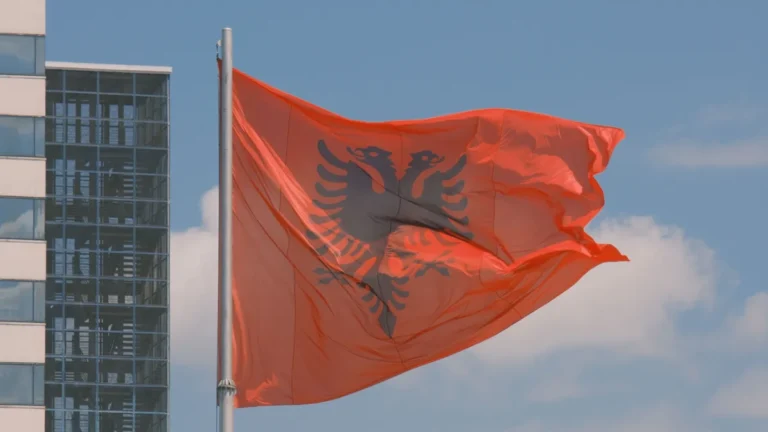
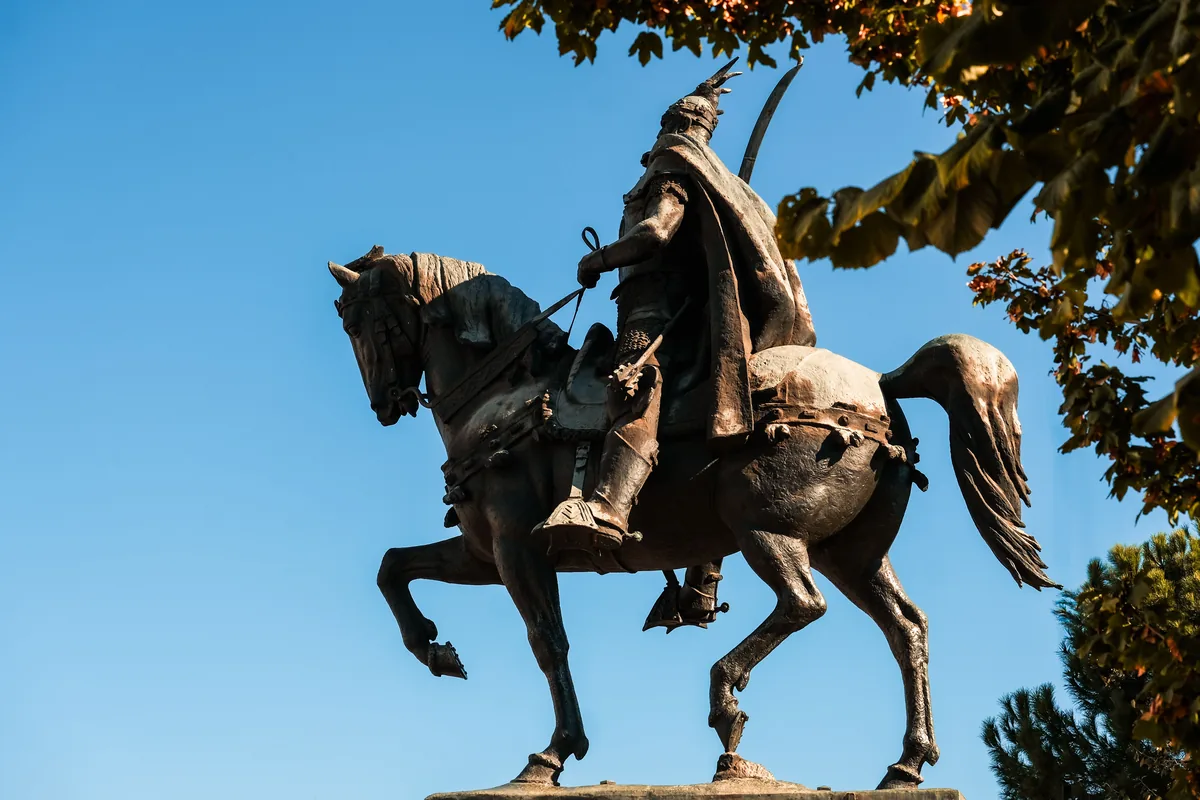
Quick facts: Gjergj Kastrioti, known as Skanderbeg (around 1405 to 1468), is Albania’s national hero. From his stronghold at Krujë he led resistance against the Ottoman Empire for roughly 25 years. His seal, a black double-headed eagle, lives on in the Albanian flag. You will find his statue in town squares across the country and the region.
You cannot travel far in Albania without meeting Skanderbeg. The main square in Tirana bears his name and his statue on horseback. His face is on memorials from Krujë to Pristina. After almost four years here I have realised that he is not just a historical figure to Albanians, he is the symbol of the nation itself, the proof that a small people once stood up to the greatest empire of the age. This guide explains who he was and why he still matters. It sits within our wider history of Albania.
Who was Skanderbeg?
He was born Gjergj Kastrioti around 1405, the son of an Albanian nobleman. As was common practice, the Ottomans took him as a young hostage and raised and trained him in their military system, where he proved brilliant. The Ottomans gave him the name İskender Bey, meaning Lord Alexander, after Alexander the Great, which Albanians turned into Skanderbeg.
The rebellion
In 1443, amid Ottoman setbacks in the Balkans, Skanderbeg switched sides. He returned to Albania, seized the fortress of Krujë, raised the flag with the double-headed eagle, and declared resistance. The following year he united a fractious group of Albanian nobles into the League of Lezhë, a rare moment of Albanian unity.
For about the next 25 years, until his death in 1468, he held off repeated Ottoman campaigns, including sieges led by sultans Murad II and Mehmed II, the same Mehmed who would conquer Constantinople. Operating from mountainous terrain with far smaller forces, Skanderbeg became famous across Europe, praised by popes and princes as a defender of Christendom against Ottoman expansion.
Why he matters so much
After Skanderbeg died in 1468, Albanian resistance crumbled, and within a decade or so the country fell fully under Ottoman rule for nearly five centuries. That makes him something more than a successful general. He represents the last period of Albanian independence before the long Ottoman era, and when nineteenth and twentieth-century Albanians built a modern national identity, he was the natural figure to rally around.
That is why his double-headed eagle became the national flag, and why he is honoured by Albanians everywhere, not only in Albania but in Kosovo, North Macedonia and the diaspora. We cover the symbol itself in our guide to the Albanian flag.
Where to follow his footsteps
Skanderbeg is very visible in the landscape, which makes him easy to build into a trip:
- Krujë: his fortress town northeast of Tirana, with a castle, the Skanderbeg Museum and a wonderful old bazaar. The most rewarding single stop for his story.
- Skanderbeg Square, Tirana: the heart of the capital, with his equestrian statue.
- Lezhë: where the League of Lezhë was formed and where he was buried.
Krujë makes an easy day trip from the capital; see how it fits a wider route in our itineraries.
Frequently asked questions
Who was Skanderbeg?
Skanderbeg, born Gjergj Kastrioti around 1405, was an Albanian nobleman and military commander who led resistance against the Ottoman Empire for about 25 years. He is Albania’s national hero.
Why is Skanderbeg important to Albanians?
He led the last sustained Albanian resistance before nearly five centuries of Ottoman rule, and he became the central symbol of Albanian national identity. His double-headed eagle is on the national flag.
Where can I learn about Skanderbeg in Albania?
Krujë, with its castle and Skanderbeg Museum, is the best place. His equestrian statue stands on Skanderbeg Square in Tirana, and he was buried in Lezhë.
What does the name Skanderbeg mean?
It comes from the Ottoman title İskender Bey, meaning Lord Alexander, after Alexander the Great, a tribute to his military skill.
See how Skanderbeg fits the whole sweep of the country’s past in our history of Albania.
Related guides: The Albanian flag, History of Albania, Albanian culture.