Albanian Dining Etiquette: A Guide to Besa at the Table
Albanian hospitality is one of the most striking things you’ll experience in this country, and nowhere is it concentrated more powerfully than at the table. Besa — the centuries-old code of honour, promise and protection — finds its most everyday expression in how Albanians treat guests over food. Get the rituals right and you’ll be welcomed into homes, conversations and lives you’d otherwise never see. Get them wrong and you’ll insult a host who only wanted to feed you. This is the honest guide to navigating an Albanian table, written from four years of living here.
The short version – The code: besa — protect, welcome and honour the guest. It’s serious. – At a home: bring a small gift (sweets, wine, flowers); accept what’s offered. – Pace: avash-avash — slowly. Meals last hours, not minutes. – Raki: accept the welcome glass. Gëzuar! with eye contact. – Refusing food: possible but tricky — accept at least a little.
What besa actually means
Besa (BEH-sa) translates roughly as “to keep the promise” — a centuries-old Albanian code rooted in the medieval Kanun (an unwritten body of mountain law) that bound a host to protect, feed and honour any guest under their roof, even at risk to themselves. Historically, this meant hosts would defend the lives of guests; today, that intensity has softened into a profound culture of generosity, but the spirit is unchanged.
The practical translation, for a visitor: whatever Albanian home you enter, you are royalty for the duration. The best food, the best chair, the first served, the most pressed to take “just one more.” It’s overwhelming the first time. It’s also, when you understand it, deeply moving — and the closest you’ll come to the heart of Albanian culture.
Before the meal: visiting an Albanian home
A few practical norms when you’ve been invited:
- Bring a small gift. Common choices: a box of sweets or chocolates, a bottle of wine (Albanian wine guide), or flowers (avoid white chrysanthemums — they’re associated with funerals). Don’t bring something extravagant; it can embarrass the host.
- Arrive on time, but don’t be early. A few minutes after the agreed hour is fine — your host is still preparing.
- Take your shoes off at the door — slippers are usually offered. This is universal in Albanian homes.
- Greet everyone individually, starting with the eldest. Handshakes are standard; older Albanians may add a kiss on each cheek for friends.
- Compliment the home briefly. “Shtëpia juaj është shumë e bukur” — “Your home is very beautiful” — never fails.
You’ll almost certainly be offered coffee, raki, sweets, or all three within minutes of arriving — well before any meal.
Greetings and seating
A small but real thing in traditional homes: the elders eat first and sit in the place of honour (usually facing the door). Don’t take that seat unless invited. Wait to be told where to sit — there’s almost always a planned arrangement.
When the meal begins, wait for the host to start eating before you do. They may toast first; you toast back.
The flow of an Albanian meal
In a traditional home or a long restaurant lunch, the rhythm is something like this:
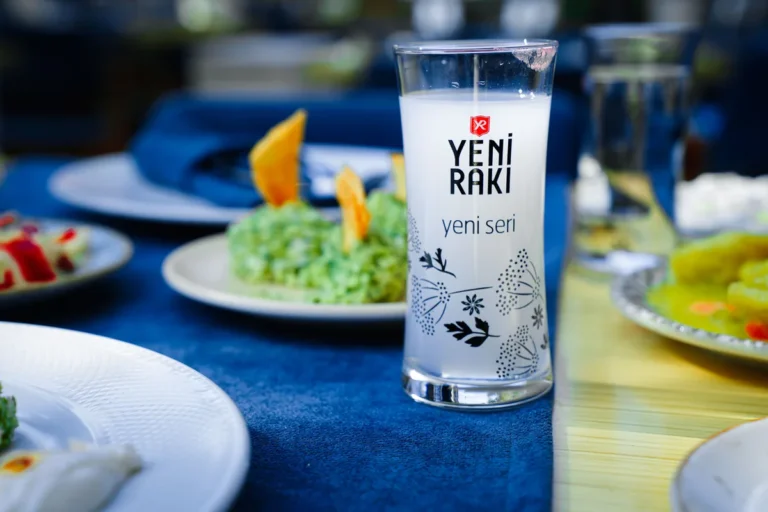
- Welcome raki — a small glass, sipped, while everyone settles. (See our raki guide for the full ritual.)
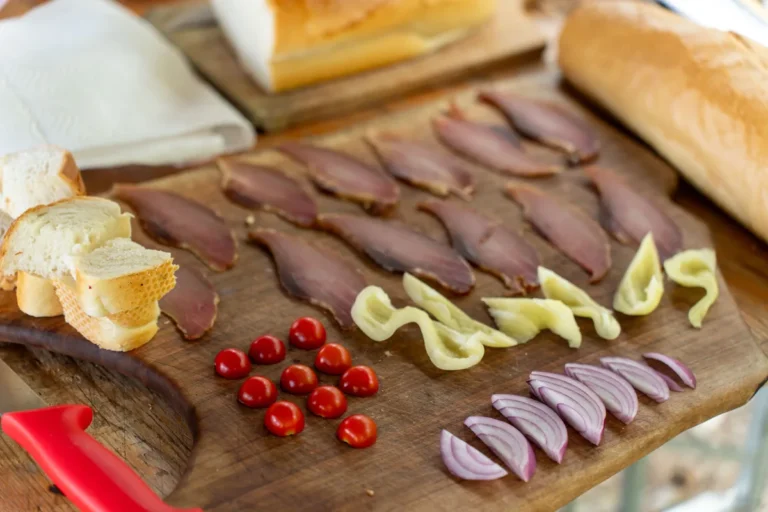
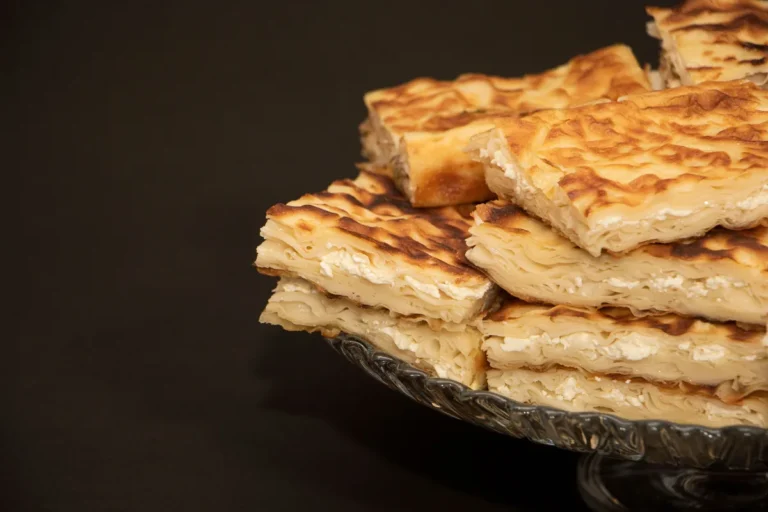
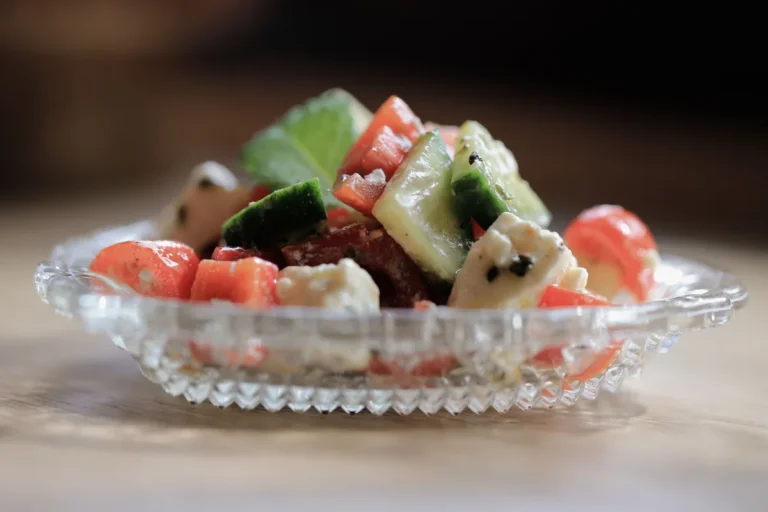
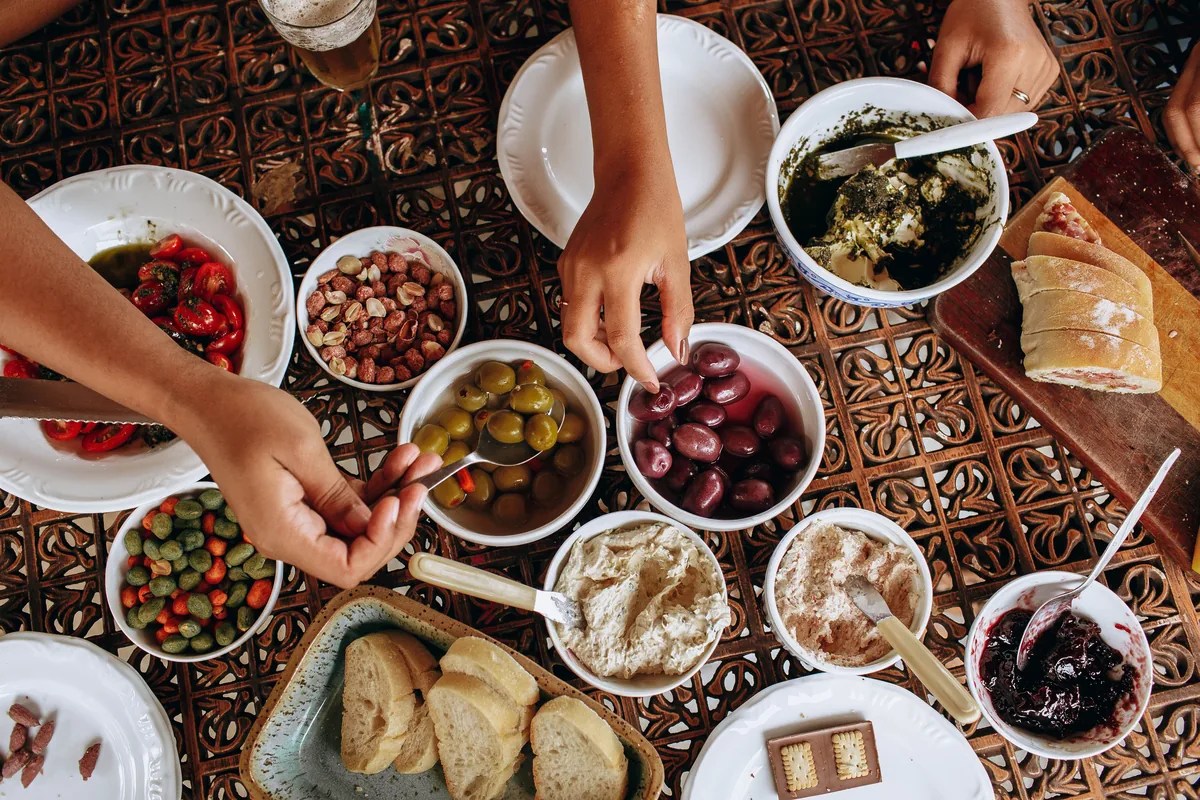
- Meze / appetisers — small dishes of olives, white cheese (djathë i bardhë), pickled vegetables, byrek slices, salad. Bread is constant.
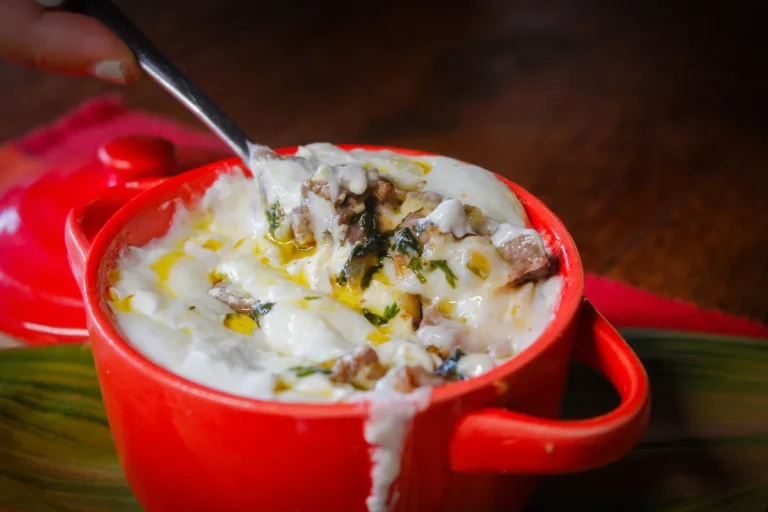
- Main course(s) — usually a baked dish like tavë kosi or fërgesë, grilled meat (qofte, lamb), or coastal seafood. There may be more than one main.
- Sweet — fruit, then a dessert like trileçe or baklava with strong coffee.
- Final coffee — and the conversation slows further. This stage can easily stretch an hour or two.
The whole thing can take three to five hours at a serious meal. Don’t try to fit it into a Western dinner-then-leave structure. Avash-avash — slowly — is the rhythm.
Mikpritja in action: the food won’t stop
The most common shock for foreigners: hosts will keep offering food, raki and coffee long after you’re full. This isn’t them not noticing — it’s them showing care. Mikpritja (“hospitality” — literally “guest-receiving”) demands that the host press the guest to eat more.
Three coping strategies, in order of cultural skill:
- Eat slowly from the start. Pace yourself. Albanians appreciate someone who lingers.
- Leave a small amount on your plate. A clean plate signals “I want more”; a small leftover signals “I’m satisfied.” This is the opposite of many Western table rules — learn it.
- Compliment the food repeatedly, then politely decline. “Faleminderit, ishte shumë e mirë, por jam plot” — “Thank you, it was excellent, but I’m full.” Be ready to say it more than once.
A pure refusal early — “no, thank you, I don’t want anything” — can hurt feelings. Accept something small, even if you don’t finish it. It’s the gesture that matters.
The raki ritual
Raki is the centre of Albanian welcoming culture. The cultural rules are well covered in our raki guide, but at the table specifically:
- Don’t refuse the welcome glass. A first raki is the universal hello.
- Eye contact and clinking with every person at the table before drinking. Gëzuar!
- Sip, don’t shoot. Albanian raki is a sipping spirit; downing it like tequila marks you out and is harder on the body than you’d expect.
- One welcome glass is enough. Second and third pours are real drinking — pace yourself.
- If you genuinely can’t drink (driving, medication, pregnancy, religious reasons), say so honestly. Albanians are understanding.
Useful Albanian phrases at the table
A little Albanian goes a remarkably long way:
- Faleminderit (fah-leh-min-DEH-rit) — Thank you
- Ju lutem (you LOO-tem) — Please
- Gëzuar! (geh-ZOO-ar) — Cheers!
- Të bëftë mirë (tuh BUFF-tay MEE-ruh) — “May it do you good” — said before/during eating, the Albanian equivalent of bon appétit
- Mirupafshim (mee-roo-PAHF-shim) — Goodbye
- Është shumë e mirë (esh-tuh SHOO-muh eh MEE-ruh) — “It’s very good” — say this about the food, often
- Jam plot, faleminderit (yam PLOHT) — “I’m full, thank you”
A few more dietary-specific phrases are in our vegetarian & vegan in Albania guide.
Restaurant etiquette
Restaurant rules are simpler and more familiar:
- Lunch is the main meal (1–2:30 pm); dinner usually starts at 9 pm or later.
- Wait to be seated at proper restaurants; at casual cafés, take any open table.
- The bill isn’t brought automatically — ask: “Llogarinë, ju lutem” (“the bill, please”).
- Tipping: 5–10% for good service is generous; rounding up is standard. Not mandatory.
- Pay at the table, not the counter, in sit-down places.
- Splitting bills is uncommon in traditional Albanian culture — usually one person pays and the others reciprocate next time. If you want to split, say so clearly at the start.
- Smoking is still allowed in many cafés and the outdoor sections of restaurants — be prepared.
Religion and food
Albania is constitutionally secular and religiously diverse (around 60–70% Muslim, 20–25% Christian, the rest other or none) — and is famously tolerant: Bajram (Eid), Christmas and Easter are all celebrated openly. A few practical notes:
- Pork is widely eaten across Albania, including by many Muslim Albanians (the country’s interpretation of religion is far more relaxed than the regional average). It’s on most menus.
- Alcohol is consumed freely, regardless of religion — Albania is famous for raki and is a real wine country (wine guide).
- During Ramadan, some Muslim hosts will fast in daylight hours; others won’t. Ask if unsure. Restaurants stay open as normal.
At the end of the meal
- Place your knife and fork together on the plate to signal you’ve finished.
- Compliment the host one more time. “Shumë faleminderit, ishte fantastike” — “Thank you very much, it was fantastic.”
- Don’t leave immediately after eating. Coffee and conversation are part of the meal. Bolting straight after the dessert is rude.
- Reciprocate. If you’re staying in town, invite your host to a restaurant or your place in return. Hospitality is a two-way ritual.
A few mistakes foreigners make
After watching plenty of them (and making them myself early on):
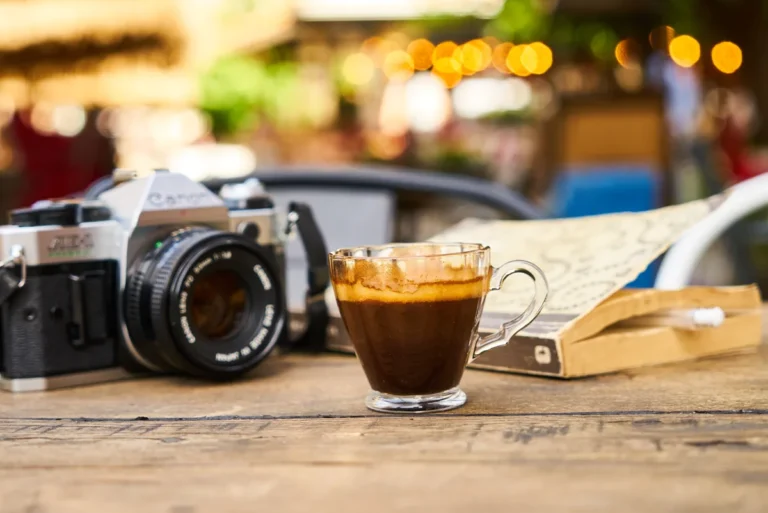
- Treating coffee as a beverage instead of a social commitment. A coffee invitation means time together, not just caffeine. Two hours is normal.
- Refusing everything offered. Almost always read as standoffish. Accept at least a little of something.
- Trying to “split the bill” awkwardly. It usually works out fairer over multiple meetings.
- Cleaning your plate completely then being surprised when more food appears.
- Talking only to one or two people at a group meal. Acknowledge everyone, especially elders.
Frequently asked questions
What is besa in Albanian culture? Besa is the centuries-old Albanian code of honour, trust and protection — the obligation to keep your word and to safeguard your guest. It underlies the country’s famous hospitality and is felt most strongly at the table.
Is it rude to refuse food in Albania? Yes, generally. Hospitality is taken seriously — refusing everything offered can hurt feelings. The Albanian way is to accept something small, even if you don’t finish it. Leave a little on your plate to signal you’re full.
How long does a typical Albanian meal last? At home or a long restaurant lunch, three to five hours is normal — meze, mains, dessert, coffee and long conversation. Don’t try to compress it into a Western-style sitting.
What should I bring when invited to an Albanian home? A small gift: sweets or chocolates, a bottle of wine, or flowers (avoid white chrysanthemums — funeral associations). Nothing extravagant; the gesture matters more than value.
Is it expected to drink raki when offered? The welcome raki is part of the culture. If you genuinely can’t drink — driving, medication, pregnancy, religious reasons — say so politely. Otherwise, accept the small glass and sip it; it’s the gesture, not the volume, that counts.
Do Albanians eat pork and drink alcohol? Yes, generally. Albania is religiously diverse but famously tolerant, and pork and alcohol are widely consumed regardless of religion. Raki is essentially the national drink. Restaurants serve a wide range of dishes including pork.
Keep exploring
Related guides: Traditional Albanian Food · Albanian Raki · Albanian Coffee Culture · Best Restaurants in Tirana · Vegetarian & Vegan in Albania · Albanian Food Guide (hub)