Albanian Desserts: A Guide to the Sweetest Side of the Country
Albanian desserts sit at a delicious crossroads. Five centuries of Ottoman rule left a deep legacy of filo-and-syrup pastries — baklava, kadaif, tulumba — while a much more recent obsession with a Latin American three-milk cake (trileçe) has somehow become the country’s modern dessert of choice. In between are wonderful regional specialties like Elbasan’s cornflour cookie (ballokume), syrup-soaked semolina cakes, and the kind of dense walnut sweets that Albanian grandmothers prepare in vast quantities for holidays. Here’s the honest guide to the sweets worth seeking out.
The short version – The modern favourite: trileçe (three-milk cake) – The Ottoman classic: bakllava (Albania’s version uses walnuts, not pistachios) – The uniquely Albanian one: ballokume (cornflour cookie from Elbasan) – Where to find them: any pastiçeri (pastry shop), café or bakery — €1–3 a slice – When to eat them: late afternoon, with a coffee — it’s a national ritual
Trileçe — the modern national dessert
If you eat one Albanian dessert, eat trileçe. A light sponge cake soaked in three milks (whole milk, condensed milk and heavy cream), topped with a caramel glaze in a feathered pattern, served cold. It’s somehow rich and light at the same time — the cream cuts through the sweetness, the caramel adds depth — and it has become Albania’s modern dessert of choice in cafés and bakeries from Tirana to Sarandë.
Interestingly, trileçe isn’t actually Albanian by origin — it came from Latin America (tres leches) and gained massive popularity here from the late 20th century onward. But the country has adopted it so completely that it now appears in almost every dessert counter in Albania, often in two or three variations (classic, chocolate, pistachio).
Cost: €2–3 for a generous slice in most cafés. Try it once and you’ll be ordering it twice.
Baklava (bakllava) — the Ottoman classic
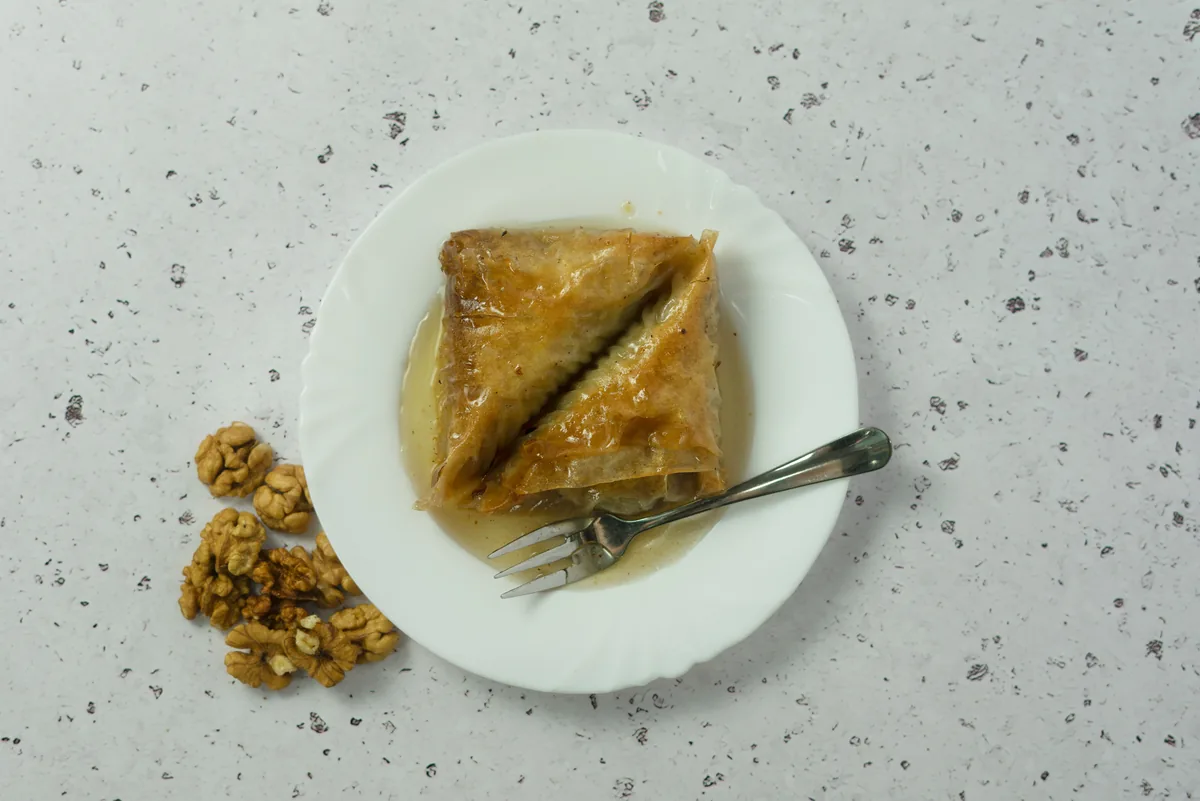
Albanian bakllava is the syrup-soaked filo classic shared across the former Ottoman world — but with a distinctly Albanian twist: it’s almost exclusively made with walnuts, not pistachios. The result is denser, earthier and more buttery than the pistachio versions you find in Turkey or Greece.
The structure: dozens of paper-thin filo layers brushed with butter, packed with chopped walnuts (and sometimes cinnamon), baked until golden, then drenched in sugar syrup while still warm. A square at a time is enough; it’s gloriously sweet.
Baklava appears at religious holidays — Bajram, Christmas, Easter — and at any wedding or celebration. It’s also sold year-round at any good pastiçeri. Look for places where the syrup is freshly made rather than from a bottle; the difference is significant.
Ballokume — Elbasan’s spring cookie
Of all Albanian desserts, ballokume is arguably the most uniquely Albanian. It’s a small, golden, slightly crumbly cornflour cookie that originated in Elbasan and is traditionally eaten on Dita e Verës (“Summer Day”) — the spring festival held every 14 March, when all of Albania celebrates the end of winter.
The texture is the giveaway: slightly crunchy outside, soft inside, with a sweet, buttery, vanilla-tinted flavour. The cornflour is what makes it distinct from almost any other European biscuit.
A folk legend dates the name to a 16th-century Ottoman ruler of Elbasan who, on tasting the cookies, exclaimed “Është ba si llokume!” — “It tastes like lokum (Turkish delight)!” — which contracted into ballokume. Whether or not the story is true, the name stuck.
Where to find them: at any pastiçeri in Elbasan year-round, and at festival stalls and bakeries everywhere in March. Outside Elbasan, the city of origin still does the best versions.
Kadaif — the “shredded” cousin of baklava
Kadaif uses the same filo-and-syrup concept as baklava, but with a different pastry: kataifi, a finely shredded “vermicelli-like” dough that looks like fine golden noodles. The result is a contrasting texture — crisp threads on top, walnut filling in the middle, syrup running through it all.
Some versions are baked in trays and cut into rectangles (the most common); others are rolled around the filling like a bird’s nest. Both are excellent. Kadaif is particularly common around religious celebrations and is on every bakery counter year-round.
Revani — syrup-soaked semolina
Revani is a moist, slightly grainy semolina cake soaked in lemon-citrus syrup. The semolina gives it a denser texture than a sponge cake — almost halfway between a cake and a pudding — and the lemon syrup balances the sweetness beautifully. It’s often topped with sliced almonds or a dusting of icing sugar.
This is “household” dessert — common in homes and small cafés, less common in fancy pastry shops. Pairs perfectly with a Turkish coffee.
Tulumba — fried, syrup-soaked dough
Tulumba (sometimes tullumba) is deep-fried ridged dough fingers, dropped into a cold sugar syrup while still hot so they soak it through. The result: crispy on the outside, syrupy and almost custardy on the inside. Eaten warm with strong coffee.
The Albanian version is shared across the Balkans and Turkey, but appears almost universally at street pastry counters here. A small portion is €1–2.
Petulla — fried dough, the everyday sweet
Already covered in the street food guide, but worth a mention here: petulla me mjaltë (fried dough with honey) is the everyday Albanian sweet, sold at bakeries and market stalls. Crispy fried dough rounds drizzled with honey, jam or simply sprinkled with sugar. Equally good for breakfast, afternoon snack or late-night craving.
Shëndetlie — the holiday walnut cake
Shëndetlie (“health” in Albanian) is a dense walnut cake soaked in syrup, traditionally made for celebrations. Honey-infused, deeply nutty, almost cake-like in density. Less commonly seen in cafés but a fixture at family weddings and religious holidays.
Sheqerpare — the bite-sized syrup cookie
Sheqerpare translates roughly as “sugar piece” — small soft butter-cookies, each topped with an almond, soaked in lemon syrup until they have a cake-like, dense, sticky texture. Always served at room temperature, always with coffee. The kind of dessert Albanian families keep in the kitchen for unexpected guests.
Qumështor — the “100% Albanian” baked custard
If you want to try a dessert that’s considered uniquely Albanian rather than shared with the wider Ottoman world, qumështor is the one to know. It’s a baked egg-and-milk custard pudding (the name literally means “milky”) from southern Albania. Light, eggy, lightly sweet — closer to a French crème caramel than to anything else, but distinctly its own.
Other sweets to know
A few more you’ll encounter in bakeries and at celebrations:
- Trigona — triangular pastries filled with custard cream and lightly syrup-glazed. Crispy outside, smooth inside.
- Hashure (ashure) — a Bajram and religious holiday dish: a sweet pudding of grains, beans, nuts and dried fruit, named after “Noah’s pudding” in Ottoman tradition.
- Sultjash — Albanian rice pudding, scented with cinnamon and vanilla.
- Kabuni — a sweet rice dish with lamb and raisins, common in southern Albania for celebrations.
- Torte me oriz — Albanian rice cake, with chocolate glaze and walnuts.
- Zupa — a layered domestic dessert of biscuits, chocolate pudding and cream; the dessert at every Albanian birthday.
How to eat dessert in Albania
A few practical notes:
- The pastiçeri. Every city and village has a pastiçeri (pastry shop) — that’s where the trileçe, baklava and kadaif live. Late afternoon (5–7 pm) is prime dessert time, often paired with the second coffee of the day. Pastry shops in Tirana, Berat, Korçë and Shkodër are especially good.
- Holiday timing. Around Bajram, Easter and Christmas, bakeries fill with extra trays of baklava, kadaif and revani — the best moment to taste these at their freshest.
- “Offering sweets is respect.” If you visit an Albanian home, you’ll almost certainly be offered something sweet (often sheqerpare or baklava kept ready for guests). Decline with a smile and you’ll be insisting your way into a polite stand-off. Accept at least a small piece — it’s part of mikpritja, the hospitality code (see our dining etiquette guide).
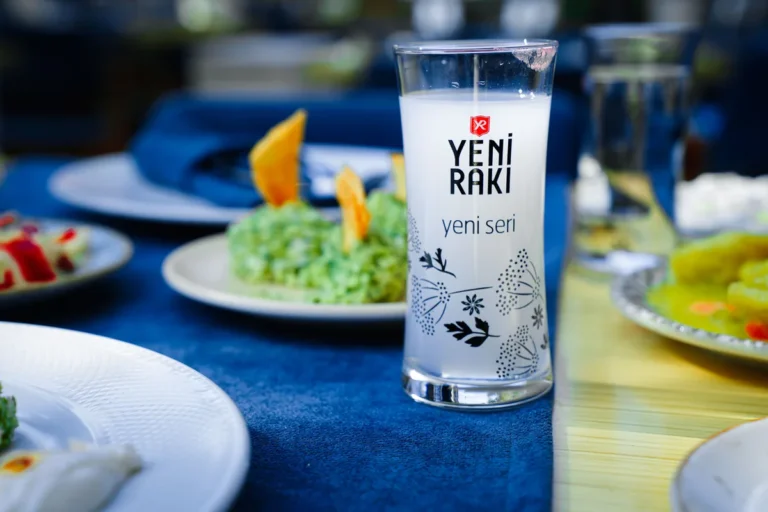
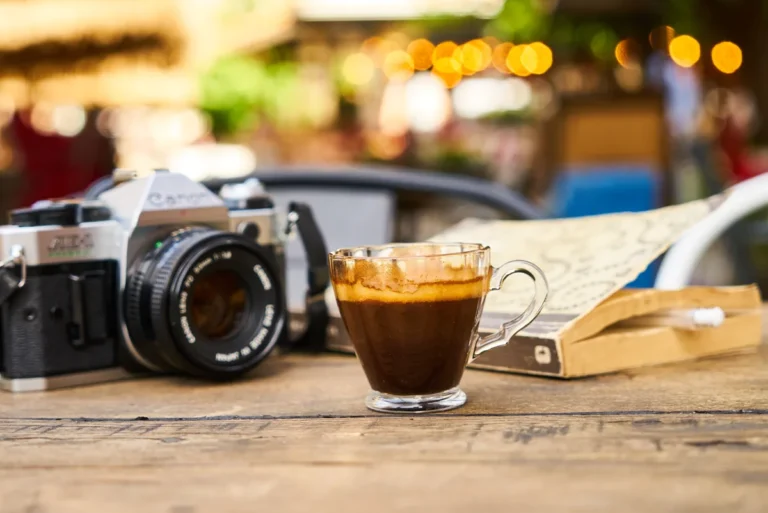
- Pair with: strong Albanian coffee or — for the adventurous — a small glass of raki.
For vegetarians and vegans
Most Albanian desserts are vegetarian (eggs, dairy, butter feature heavily). Vegan-friendly options are harder — many sweets are built on butter, eggs or milk syrup. Your safest bets are:
- Petulla with honey and jam (vegan if no butter brushed on top)
- Hashure / ashure (often plant-based when made traditionally)
- Some baklava versions are made with oil rather than butter — ask
- Fresh fruit (excellent and abundant in summer)
More guidance and useful Albanian phrases in our vegetarian & vegan in Albania guide.
Frequently asked questions
What is the most popular Albanian dessert? Trileçe — a sponge cake soaked in three milks with a caramel glaze — is the modern favourite found in cafés across the country. Baklava and ballokume are the most traditional Albanian sweets.
Is baklava Albanian? Baklava is shared across the former Ottoman world and isn’t uniquely Albanian, but the country has its own recipe — typically with walnuts rather than pistachios — and it’s a staple at religious holidays and celebrations.
What is ballokume? Ballokume is a small cornflour cookie from Elbasan, traditionally eaten on Dita e Verës (14 March). It’s one of the most uniquely Albanian sweets — crunchy outside, soft inside, with a buttery, slightly sweet flavour.
Is trileçe really Albanian? The recipe originated in Latin America as tres leches, but Albania has adopted it so thoroughly since the late 20th century that it’s now the country’s modern dessert of choice and one of the most recognisable Albanian café items.
Where can I buy Albanian desserts? At any pastiçeri (pastry shop) — they’re in every city and most towns. Late afternoon is prime dessert time, paired with coffee.
Are Albanian desserts very sweet? Yes, generally. Many are syrup-soaked Ottoman-tradition pastries (baklava, kadaif, tulumba, revani, sheqerpare). Trileçe is rich but slightly less heavy. Most are best enjoyed in small portions with strong coffee.
Keep exploring
Related guides: Traditional Albanian Food · Albanian Coffee Culture · Albanian Street Food · Best Restaurants in Tirana · Albanian Dining Etiquette · Albanian Food Guide (hub)