The Blue Eye, Albania (Syri i Kaltër): How to Visit the Famous Blue Spring
Few places in Albania look as unreal as the Blue Eye. A deep sapphire “pupil” ringed by glowing turquoise, fed by ice-cold water surging up from a cave so deep no one has ever reached the bottom — it’s one of southern Albania’s most photographed natural wonders, and an easy half-day trip from the coast. Here’s everything you need to plan your visit: how to get there, what it costs, opening hours, the swimming rules, and the best time to go.
Quick facts
– Where: near Muzinë village, southern Albania, inside Syri i Kaltër Natural Park
– From Saranda: about a 35–40 minute drive (~22 km)
– Entrance: ~50 LEK (≈€0.50) per person, plus ~100–200 LEK per car — cash only
– Open: daily, roughly 7:00 am–7:00 pm
– Swimming: not allowed (protected natural monument)
– Best time: May to early October; arrive early
What is the Blue Eye?
The Blue Eye (in Albanian, Syri i Kaltër) is a natural karst spring where water pushes up from deep underground with astonishing force — around 18,400 litres per second. Divers have descended past 50 metres without finding the bottom, so its true depth remains a mystery. The result is a hypnotic circle of colour: a dark blue centre that really does resemble an eye, surrounded by rings of clear turquoise.
The spring is the source of the Bistricë River, which runs about 25 km to the Ionian Sea near Saranda. It sits inside a protected natural park of oak and sycamore forest, and also serves as a drinking-water source for the local area — one of the reasons the site is carefully protected.
A quick clarification: Albania actually has two “Blue Eyes.” This guide covers the famous one in the south, near Saranda. There’s a separate, smaller Blue Eye up in Theth, in the northern Albanian Alps — a pool fed by a waterfall. If you’ve seen photos of the vivid spring that bubbles up from below, that’s the southern one described here.
Where it is and how to get there
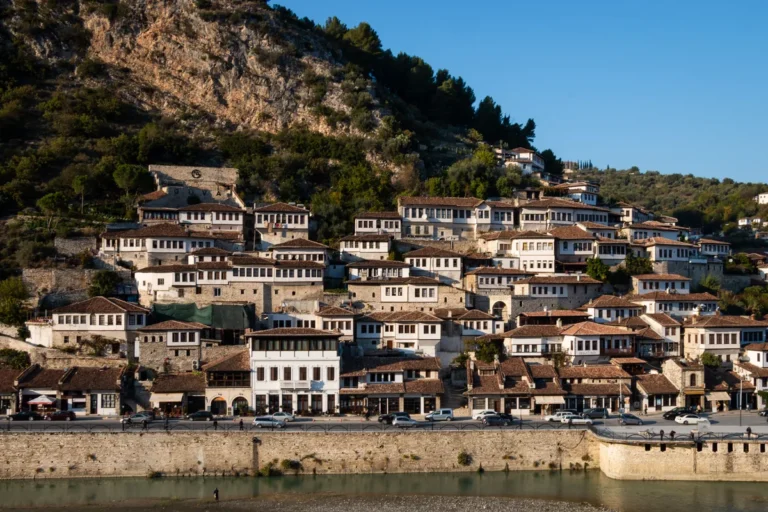
The Blue Eye lies near Muzinë, conveniently positioned between the Albanian Riviera and the UNESCO town of Gjirokastër — which makes it a natural stop on a southern road trip. Approximate drive times:
- Saranda: ~35–40 minutes
- Ksamil: ~50 minutes
- Gjirokastër: ~50 minutes
- Tirana: ~4 hours
By car is by far the easiest option, and the drive itself is scenic. Buses and furgons (minibuses) running between Saranda and Gjirokastër can drop you on the main road, but that leaves a roughly 2 km walk to the spring. Taxis and organised day tours from Saranda or Ksamil are also straightforward.
From the entrance and car park, it’s a pleasant walk of around 1.5–2 km along a shaded forest path to reach the spring itself. A small shuttle sometimes operates for those who’d rather not walk.
Entrance fee, opening hours and cash
The Blue Eye is wonderfully cheap: roughly 50 LEK (about €0.50) per person, plus around 100–200 LEK per car, with parking charged separately depending on how long you stay. The site is generally open daily from about 7:00 am to 7:00 pm.
Important: bring cash (LEK or euros). There are no ATMs nearby, and you can’t pay the entrance or parking fees by card.
Can you swim in the Blue Eye?
Officially, no — swimming is not allowed. The Blue Eye is a protected natural monument and a local drinking-water source, and the rule exists to preserve the fragile ecosystem. You’ll see signs to that effect, and rangers do enforce it.
You may notice some visitors ignoring the rule and jumping in from the platform. We’d encourage you not to: beyond the protected status, the water sits at around 10–13°C all year round, so it’s bitterly cold. Dipping your feet from the edge is the most you should do. Respecting the rules keeps this place beautiful for everyone who comes after you.
Best time to visit
The Blue Eye is at its best from May to early October, when the surrounding forest is green and the light brings out the colours of the water. The single biggest tip: go early in the morning. In July and August the site gets very crowded, especially midday when locals come to cool off, and early light is also kinder for photos. The shoulder months of May and September offer the best balance of good weather and thinner crowds.
What to bring and a few tips
- Cash for entry and parking (no card payments, no ATMs).
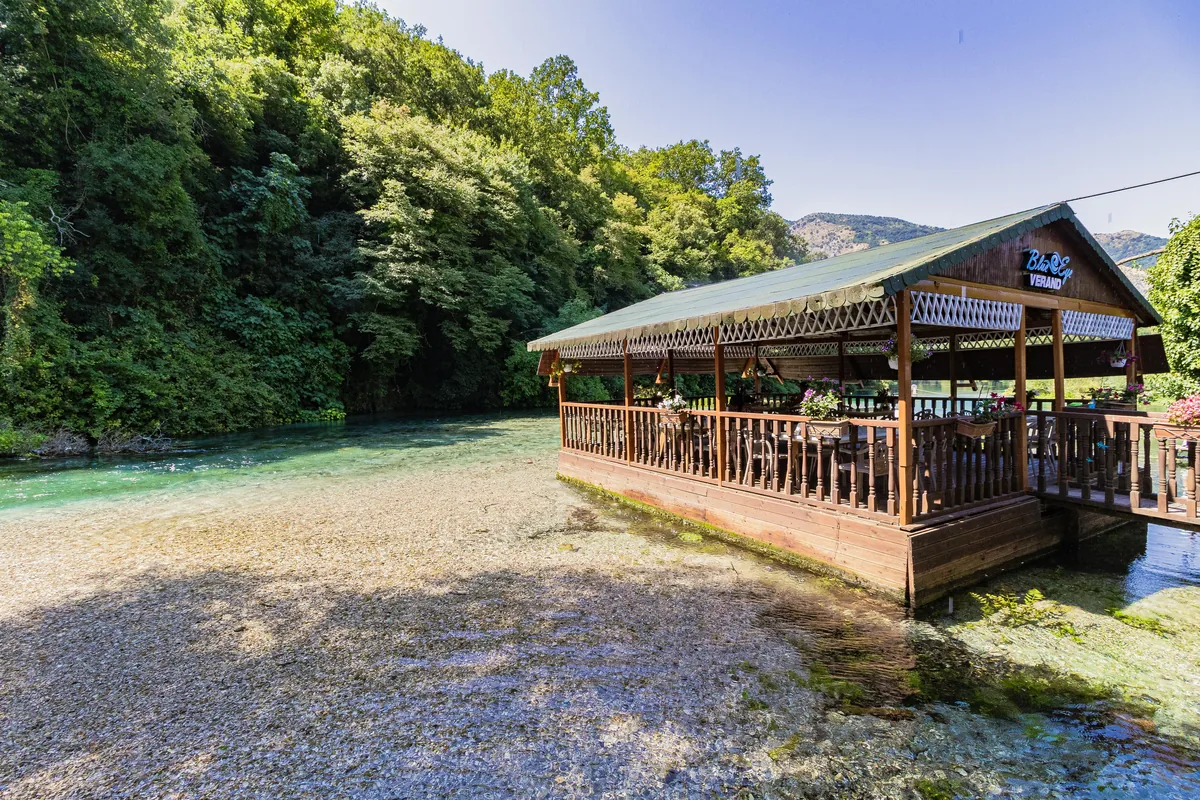
- Water and snacks — there’s a café/restaurant on site, but options are limited.
- Comfortable shoes for the walk in from the car park.
- Sun protection in summer.
- For photographers: visit on a sunny day and bring a polarising filter to make the blues pop.
- Stay on the marked paths, use any drone responsibly, and take your litter with you.
Combine your visit
The Blue Eye works perfectly as a half-day trip or a stopover when travelling between the coast and the mountains. The classic route pairs it with Saranda or Ksamil on the coast and Gjirokastër inland — easily done in a day with a car. It’s also an easy add-on to a wider southern Albania itinerary.
Frequently asked questions
How much does it cost to visit the Blue Eye?
About 50 LEK (≈€0.50) per person, plus a small per-car and parking fee. Bring cash — cards aren’t accepted and there are no ATMs nearby.
Can you swim in the Blue Eye?
No. Swimming is officially banned to protect the spring, which is also a drinking-water source. The water is also extremely cold (around 10–13°C year-round).
How do you get to the Blue Eye from Saranda?
It’s about a 35–40 minute drive. Buses drop you roughly 2 km away, and taxis and organised tours are also available.
How deep is the Blue Eye?
More than 50 metres. Divers have reached about 50 m without finding the bottom, so the true depth is still unknown.
When is the best time to visit?
May to early October, and ideally early in the morning to avoid the crowds and catch the best light.
Is the Blue Eye near Saranda the same as the one in Theth?
No. There are two Blue Eyes in Albania. This is the famous southern spring near Saranda; the Theth Blue Eye is a separate pool in the northern Alps.
Planning the rest of your trip?
The Blue Eye pairs perfectly with the towns nearby. Read our guides to Saranda and Gjirokastër, or see all our top picks in the best places to visit in Albania.
Related guides: Saranda Travel Guide · Gjirokastër Travel Guide · Ksamil Guide · Best Time to Visit Albania · Best Places to Visit in Albania