Byrek: A Complete Guide to Albania’s National Pastry
If Albania has an unofficial national food, it isn’t tavë kosi or qofte — it’s byrek. The flaky, layered savoury pastry is to Albanians what pizza is to Italians: cheap, everywhere, and the default answer to “what should we eat?” Walk down any street in Tirana, Durrës or Berat and you’ll find a byrektore (a shop that makes nothing but byrek) doing brisk trade from breakfast onward. Here’s what byrek actually is, the main types you’ll see, and how to spot the good stuff from the just-okay.
The short version – What: layered filo pastry with savoury (sometimes sweet) filling – Cost: usually €1–2 for a slice – Best with: a glass of dhallë (buttermilk) or yoghurt – Where: a proper byrektore, not a heat-lamp counter – When: breakfast, lunch, snack, late-night — any time at all
What is byrek?
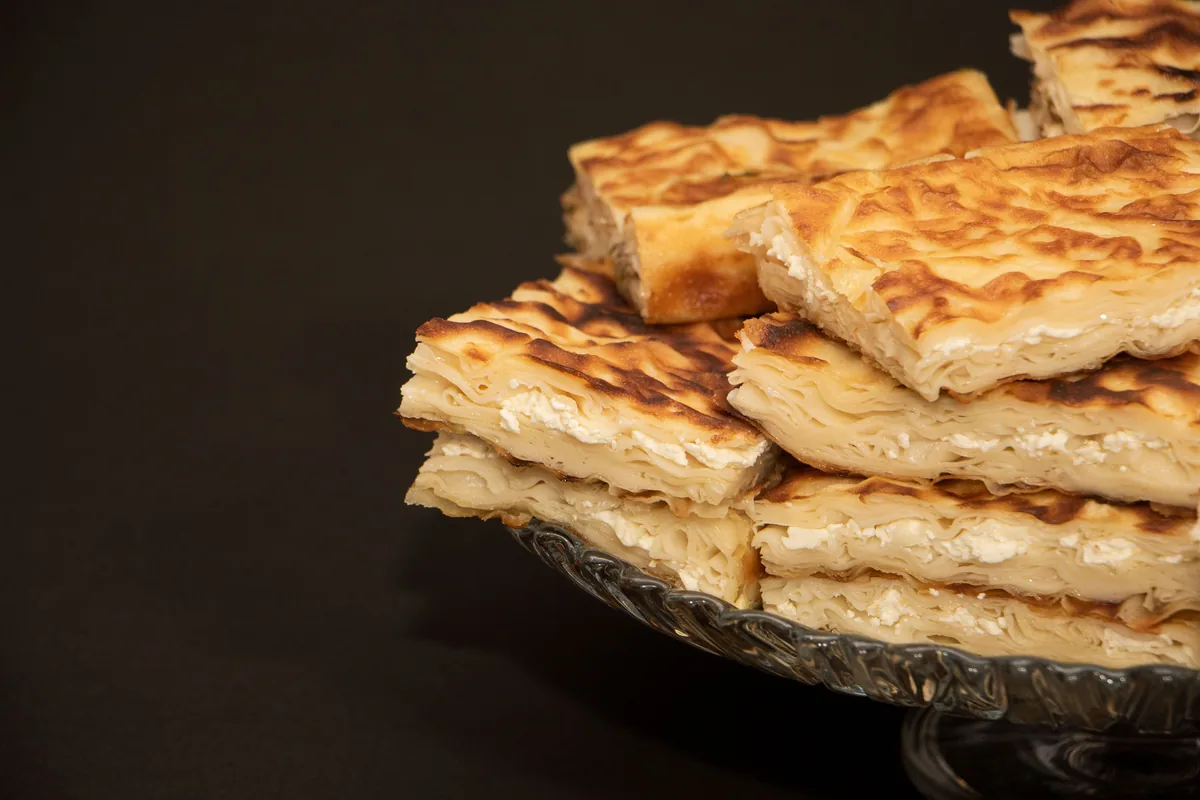
Byrek is a baked savoury pie made of paper-thin layers of filo dough (called yufka in the Ottoman tradition), brushed with oil or butter between sheets and filled with anything from cheese and spinach to meat or pumpkin. It’s baked in a wide tray and cut into triangles or rectangles, or sometimes shaped as individual triangular hand-pies.
The dough is the heart of the dish. Done well, it shatters when you bite it — flaky, golden, paper-thin layers stacked into something that’s somehow crispy on top and tender inside. A grandmother’s version is stretched by hand across an entire kitchen table, so thin you can read print through it.
Where byrek comes from
Byrek’s older brother is the Ottoman börek, which spread from Anatolia across the Balkans during five centuries of Ottoman rule. Every country in the region — Bosnia, Serbia, North Macedonia, Greece, Bulgaria, Romania — has its own version, and arguments about which is “best” are a regional pastime. The Albanian version is distinctive for a few reasons:
- Wider range of fillings than the Serbo-Croatian burek, which traditionally means meat only.
- A particularly thin, flaky dough, especially in southern Albania, where byrek is most refined.
- A second local name — lakror — used especially for byrek with leafy-green fillings.
In Tirana the typical byrek is cheese-and-egg or spinach-and-feta; in the south it’s often vegetable-forward; in the north lakror with wild greens is the standard.
The main types
Order any of these by saying “byrek me [filling]“:
- Me djathë — with cheese (usually feta or local white cheese). The default.
- Me spinaq — with spinach (often with feta). The most popular vegetable version.
- Me mish — with seasoned ground beef or lamb. Heartier and more filling.
- Me kungull — with sweet pumpkin. A wonderful, slightly sweet autumn-winter favourite.
- Me lakër — with cabbage or wild greens (this is what lakror usually means).
- Me presh — with leek.
- Me patate — with potato (sometimes with onion).
- Me gjizë — with gjizë, the salty Albanian curd cheese — very local, very good.
- Me hithra — with stinging nettles. Spring only, and worth seeking out.
- Me qumësht — a sweeter, milk-and-egg-soaked version, more like a pudding pastry.
How to spot the good stuff
After a few years here, this is what I look for:
- Go to a byrektore — a dedicated byrek shop — rather than a generic bakery or a tourist café. Better dough, better turnover.
- Look for high turnover. Byrek is best straight from the oven, ideally within an hour. If pieces have been sitting under a heat lamp all afternoon, the pastry goes soft and tired.
- Check the layers. A good slice shows distinct, crisp top layers and a tender, oil-glossed bottom — not a uniform, sponge-cake texture.
- Don’t worry about appearance. The best byrektore in town often looks the least fancy.
- Local price ≈ €1–2. Tourist-strip versions charging €4 are paying for the address, not the pastry.
How to eat it
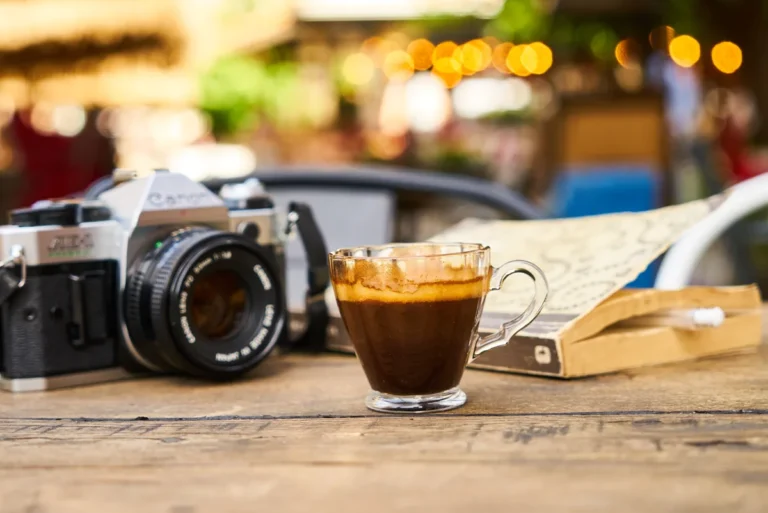
Pick it up with your hands, fold it lightly if it’s a triangle, and eat it warm. The classic accompaniment is dhallë — chilled, lightly salted yoghurt drink (close to ayran), which cuts the oil and complements the filling. Plain yoghurt or a coffee work just as well. You can absolutely eat byrek for breakfast and again for lunch the same day; no one will judge you.
Where in Albania has the best byrek?
Hard to give a single answer — every Albanian will defend their region’s version. A few honest generalisations:
- Southern Albania (Gjirokastër, Berat, Përmet) is often credited with the finest pastry — the thinnest, most delicate layers.
- Tirana has the broadest variety of fillings and styles at any hour.
- Mountain villages in the north do excellent lakror with wild greens and dairy you don’t taste in the cities.
How byrek differs from Greek spanakopita and Bosnian burek
Three quick distinctions:
- vs Greek spanakopita. Spanakopita is a spinach-and-feta-only dish; Albanian byrek can be anything. Greek versions also tend to use more butter and eggs in the filling.
- vs Bosnian/Serbian burek. In Bosnia and Serbia, burek technically means meat-filled only (anything else is sirnica, zeljanica, etc., with its own name). Albanian byrek is the umbrella term for all fillings.
- vs Turkish börek. Turkish börek includes a huge family of shapes (cigars, rolls, snails, layered pans). Albanian byrek is usually the tray-baked kind, cut into slices.
A quick note for vegetarians and vegans
Most byrek is naturally vegetarian — spinach, cheese, pumpkin, leek, potato versions are everywhere. Vegan is harder because the dough is often brushed with butter and the popular fillings use feta; ask for byrek vegan in Tirana or stick to the simple potato or pumpkin versions, and check the brushing fat. More on this in our vegetarian & vegan in Albania guide.
How to make byrek at home
The short version: paper-thin filo (homemade or shop-bought), oil between every layer, a filling that isn’t too wet (or you’ll get a soggy bottom), and a hot oven. The long version is a weekend project — start with a half-recipe and a forgiving filling like spinach-feta. If you’d rather just eat it, see the rest of the Albanian food guide.
Frequently asked questions
What is byrek? Byrek is Albania’s beloved savoury pastry: paper-thin filo dough layered with oil and filled with cheese, spinach, meat, pumpkin or vegetables, then baked until flaky.
What’s the difference between byrek and burek? The pastries are cousins. Albanian byrek is an umbrella term used for any filling; Bosnian and Serbian burek traditionally means meat-filled only, with other fillings going by different names.
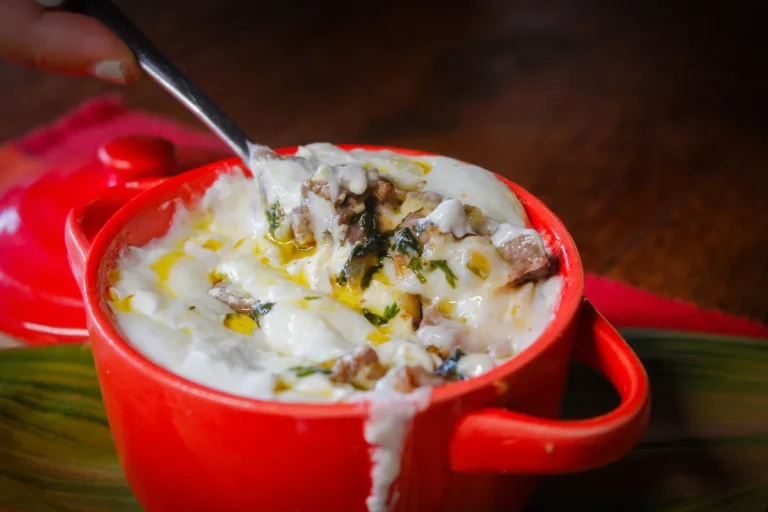
Is byrek the national dish of Albania? Tavë kosi is generally called the national dish, but byrek is the national everyday food — far more commonly eaten and a daily staple across the country.
Is byrek vegetarian? Many versions are — cheese, spinach, pumpkin, leek, potato. Vegan options are harder because the dough is usually brushed with butter and the most popular fillings include cheese.
Where can I find the best byrek in Albania? Look for a dedicated byrektore with high turnover. Southern Albania is often credited with the finest pastry; Tirana has the broadest variety.
How much does byrek cost in Albania? A slice usually costs about €1–2 from a local byrektore. Tourist-strip cafés can charge two or three times that for the same thing.
Keep exploring
Related guides: Traditional Albanian Food · Albanian Street Food · Tavë Kosi · Albanian Food Guide (hub) · Vegetarian & Vegan in Albania