Communism in Albania: The Hoxha Era and Its Legacy
Quick facts: Albania was a communist dictatorship from 1944 until 1990 to 1991, led by Enver Hoxha until his death in 1985. The regime broke with Yugoslavia, the USSR and finally China, sealing the country off from the world. It banned religion in 1967 and built tens of thousands of concrete bunkers. You can see the era up close at the Bunk’Art museums in Tirana.
The communist period is the part of Albanian history that fascinates visitors most, and for good reason. After almost four years here I still find it hard to grasp that within living memory this was one of the most closed societies on earth, where owning a car or watching foreign television could land you in trouble. This guide explains what happened, why it still shapes the country, and where you can see it for yourself. It sits within our broader history of Albania.
How it began
Communist partisans, organised during the Second World War resistance to Italian and German occupation, took power in 1944 under Enver Hoxha. Over the next four and a half decades he built a hardline Stalinist state and outlasted every patron he ever had.
The great isolation
What set Albania apart was not just being communist, it was being alone. Hoxha fell out with one ally after another:
- He broke with Yugoslavia in 1948.
- He broke with the Soviet Union in 1961, rejecting Khrushchev’s reforms as a betrayal of Stalin.
- He finally broke with China in the late 1970s.
By the end Albania trusted no one and turned entirely inward. Borders were effectively sealed, foreign travel was nearly impossible for ordinary citizens, private cars were banned for most people, and the regime preached total self-reliance. This isolation is the deepest reason Albania felt frozen in time when it finally opened in the 1990s.
Religion abolished
In 1967 the regime went further than any other, declaring Albania the world’s first officially atheist state. Mosques and churches were shut, converted into warehouses or sports halls, or demolished, and clergy were imprisoned. A whole generation grew up with no religious practice. Paradoxically, this is part of why religion sits so lightly and tolerantly in Albania today, a point we explore in religion in Albania.
The bunkers
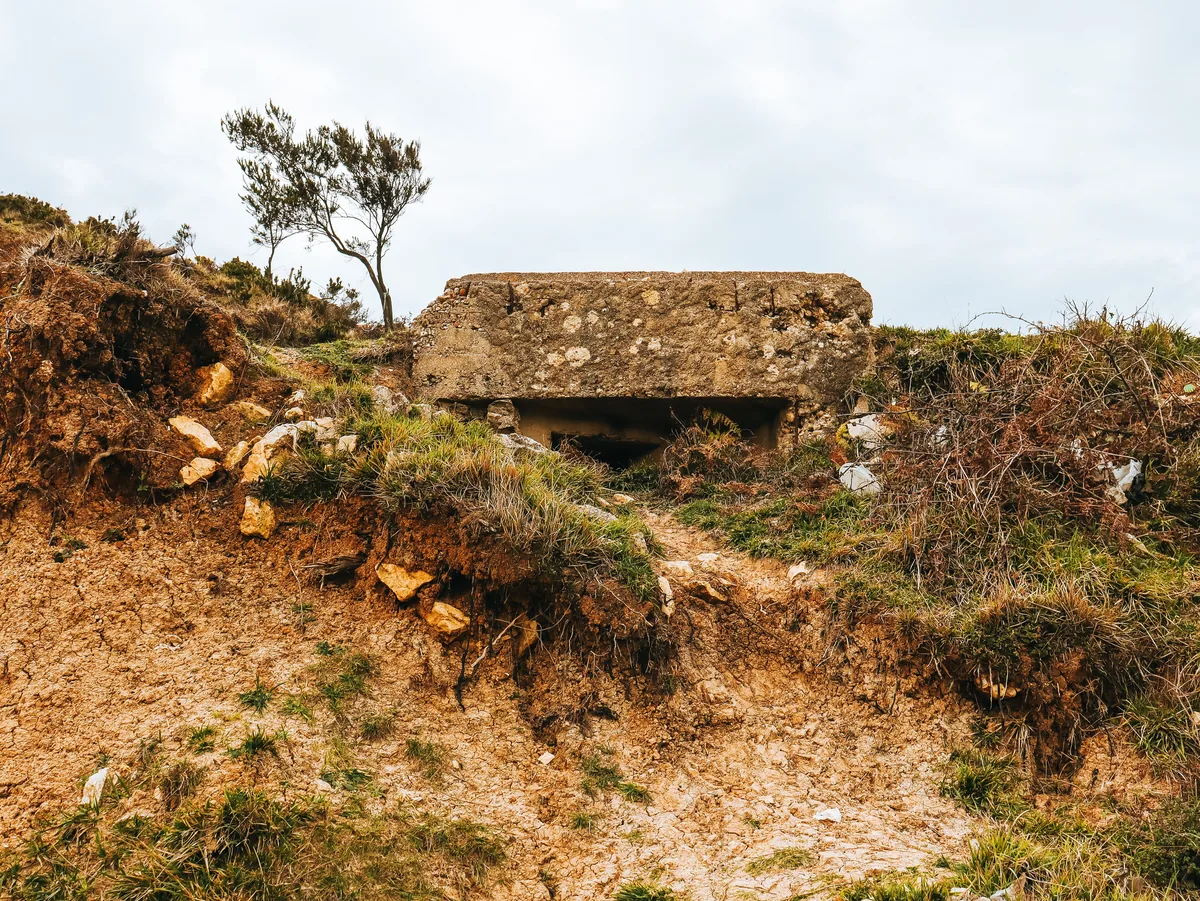
The most visible legacy is concrete. Convinced that enemies on all sides were about to invade, Hoxha ordered the construction of defensive bunkers across the entire country. Estimates of how many were actually built vary widely, with figures often cited in the range of many tens of thousands and some counts above 170,000. You will see them everywhere even now: half-buried domes on beaches, in fields, on mountain passes, in people’s gardens. Some have been turned into cafes, tattoo parlours and museums.
Daily life under the regime
Life was tightly controlled. The secret police, the Sigurimi, ran an enormous network of informers. People were assigned jobs, internal “enemies” and their families were sent to labour camps or internal exile, and any sign of foreign influence, from blue jeans to long hair, could bring punishment. Food and goods were scarce. At the same time the regime did expand literacy, basic healthcare and electrification, and many older Albanians hold genuinely mixed memories of the period.
How it ended
Hoxha died in 1985 and was succeeded by Ramiz Alia, who could not hold back the wave that swept Eastern Europe. Protests, the toppling of Hoxha’s statue in Tirana in 1991, and the first multi-party elections brought the system down. The transition was painful: mass emigration to Greece and Italy, economic collapse, and in 1997 the chaos that followed the failure of nationwide pyramid investment schemes. Albania has spent the decades since rebuilding and opening up.
Seeing it for yourself
If the period interests you, Tirana is the place to engage with it:
- Bunk’Art 1 and Bunk’Art 2: two huge former bunkers turned into excellent museums, one on the city’s edge covering the regime and military history, one in the centre focused on the Sigurimi and political persecution.
- The House of Leaves: the former secret-police surveillance building, now a museum of espionage and persecution.
- The Pyramid of Tirana: once a museum to Hoxha, recently reborn as a tech and culture centre, a neat symbol of the country’s turn.
These are easy to fold into a city visit; see how Tirana fits a wider trip in our itineraries.
Frequently asked questions
Who was Enver Hoxha?
Enver Hoxha was the communist leader who ruled Albania from 1944 until his death in 1985, building one of the most isolated and repressive states in the world.
Why does Albania have so many bunkers?
Enver Hoxha, fearing invasion from all sides, ordered defensive bunkers built across the entire country during the communist period. Many tens of thousands were constructed and a large number still stand.
When did communism end in Albania?
The communist system fell in 1990 to 1991, with mass protests, the toppling of Hoxha’s statue, and the first multi-party elections, ending more than four decades of one-party rule.
Can you visit communist sites in Albania?
Yes. The Bunk’Art 1 and 2 museums and the House of Leaves in Tirana are the best places to understand the era, and bunkers are visible all over the country.
Want the full sweep of Albanian history? Read our timeline from Illyria to today.
Related guides: History of Albania, Religion in Albania, Albanian culture.